
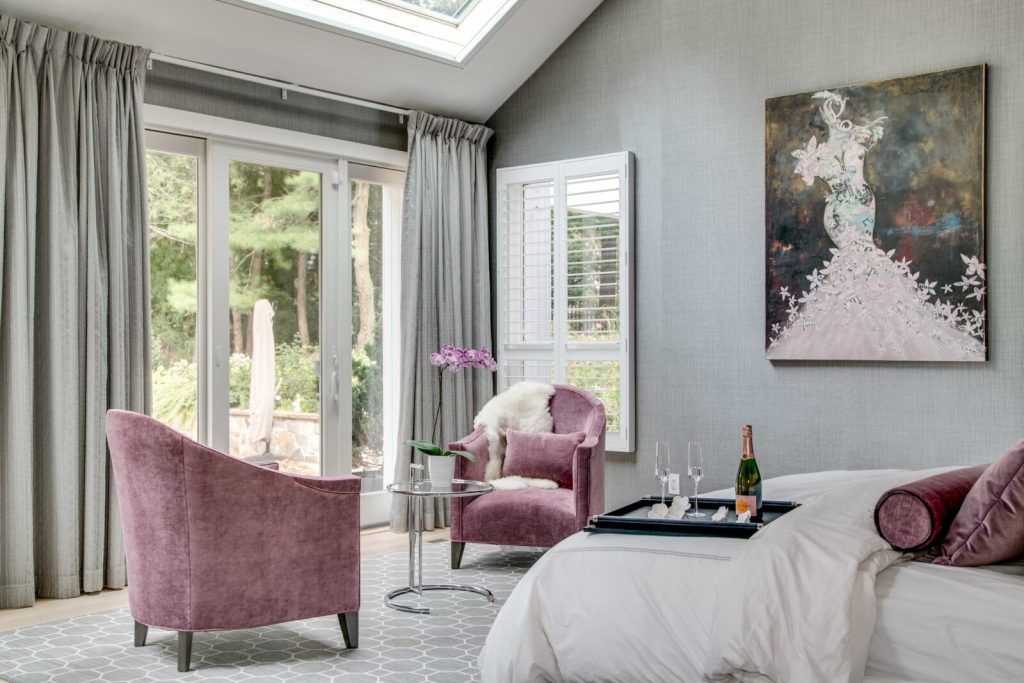
Staring at an empty room is the hardest part of decorating. Where do you even begin? Paint chips? Furniture? Pinterest?
Designers have an answer. We use a few proven starting points on every project. This post shares the three I use most, with real rooms to show how each one plays out.
The Three Starting Points at a Glance
| Starting Point | What You Do | Best When |
|---|---|---|
| 1. Find your inspiration piece | Build the whole room around one item you love | You feel drawn to a rug, fabric, or artwork |
| 2. Take one bold risk | Commit to a single daring move that lifts the room | The plan feels safe but flat |
| 3. Bring in a pro | Let a designer guide the vision and the budget | Fear of a costly mistake is stalling you |
1. Find Your Inspiration Piece
Color is a great inspiration. That does not mean you should start with wall paint. Instead, hunt for fabrics, textiles, patterns, and accessories that truly excite you.
For me, the area rug usually comes first. In our modern transitional dining room below, the rug anchors the whole composition. Its blue inspired the room and informed the ivories and the shades of blue in the artwork.
Your spark might be different:
- A beautiful pattern on a single throw pillow
- The earthy texture of a woven footstool
- A piece of artwork or a vase that simply speaks to you
Stay open on your design journey and the piece will probably find you first. Once you have created a story with the elements you sourced, find the common thread among them. That thread reveals the perfect paint colors for your walls. And do not forget your ceiling. It is the fifth wall after all.
2. Take One Bold Risk
A bold color. A funky pattern. An unusual silhouette or some abstract art. Whatever you internally yearn for, do it.
Just not all at once. That could get chaotic. Pick one special idea and commit to it. Playing everything safe can leave you with a room that is a bit of a yawn. Unless it is your bedroom, that might not be a good thing.
The classic principles of design give you plenty of places to push:
- Balance and contrast
- Emphasis and movement
- Pattern and rhythm
- Unity and variety
Three Risks From Real Rooms
In one neutral room I played with the chair silhouette, a modern take on the classic wing chair. The real pop came from a custom ottoman in a colorful chevron pattern. Luxe looking but unexpected, and it plays off the area rug so well that I could not resist.
Bolder strides came in another space. Playful lighting shapes bounce your eye around the room. Then there is the ceiling, painted bright red. Isn’t it delicious! Red pulls through the throw pillows and the abstract art while neutrals ground everything else. One fabulous pop, and the space stays balanced.
Speaking of drama, nothing says it louder than a black wall. My design below contrasts rich natural woods against elegant black walls. The furniture glows against them.
3. Bring In a Professional
Fear stops more projects than budgets do. Nobody wants to make a costly mistake, so many people never start at all.
A designer solves that. We turn your vision into a real plan, spot your pain points, and keep purchases on budget. Trade sources beyond retail stores deliver better pricing and that custom designer look. Quality sourcing matters here too, and our guide to sourcing high-end furniture explains how the trade side works.
Curious what working with us looks like? Our interior design services page covers the whole process from first meeting to finished room.
Frequently Asked Questions
How do I start decorating a room from scratch?
Start with one inspiration piece you love, such as a rug, fabric, or artwork. Build the palette and furniture choices around it, then pick wall colors last from the common thread.
Should I pick paint colors first?
No. Paint comes near the end. Fabrics, rugs, and art are harder to match than paint, so choose those first and let them reveal the right wall colors.
What is an inspiration piece in decorating?
An inspiration piece is the one item that sparks the whole design. It might be an area rug, a throw pillow pattern, or a piece of art. Every later choice supports it.
How do I make a neutral room more interesting?
Take one bold risk. A patterned ottoman, a painted ceiling, or a dramatic black wall can lift a neutral room. Keep the rest grounded so the space stays balanced.
When should I hire an interior designer instead?
Hire a designer when fear of costly mistakes is stalling the project or the budget feels risky. Designers guide purchases, access trade-only sources, and bring the vision to life without the stress.
About the Author
Robyn Baumgarten
Founder & Principal Designer•Interiors by Just Design
Robyn is the visionary behind Interiors by Just Design, bringing decades of experience and an impeccable eye for detail to every project. Her signature approach centers on casual elegance, timeless, classic pieces layered with texture, light, and the natural materials that define refined coastal living across Long Island and the Hamptons.